If you are planning a bathroom project, one of the first questions is usually:
How much is this going to cost?
The answer depends on what kind of project you are actually planning.
A simple refresh is very different from a full remodel. A full remodel is different from creating a brand-new bathroom where one does not currently exist.
For a straightforward full bathroom remodel in Northern New Jersey, I like to use this as a practical starting point:
About $8,000 in Labor, Plus Materials
That assumes a typical bathroom is being gutted and rebuilt, while the major fixture locations remain generally in the same areas.
From there, the total cost depends heavily on material selections, plumbing and electrical work, tile, accessibility features, and what we find once demolition begins.
Before getting into pricing, it helps to define the different types of bathroom projects.
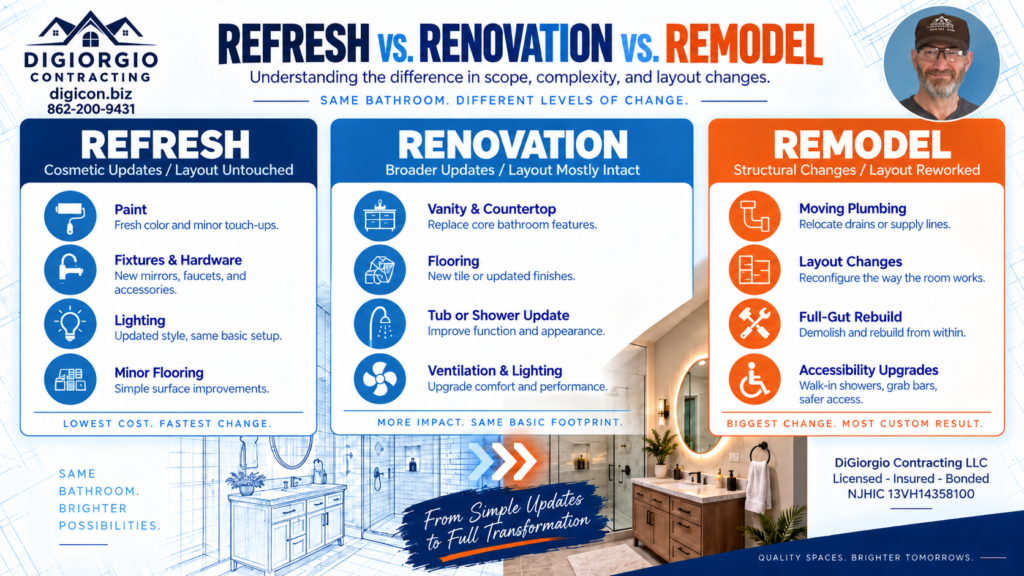
Bathroom Refresh vs. Renovation vs. Remodel
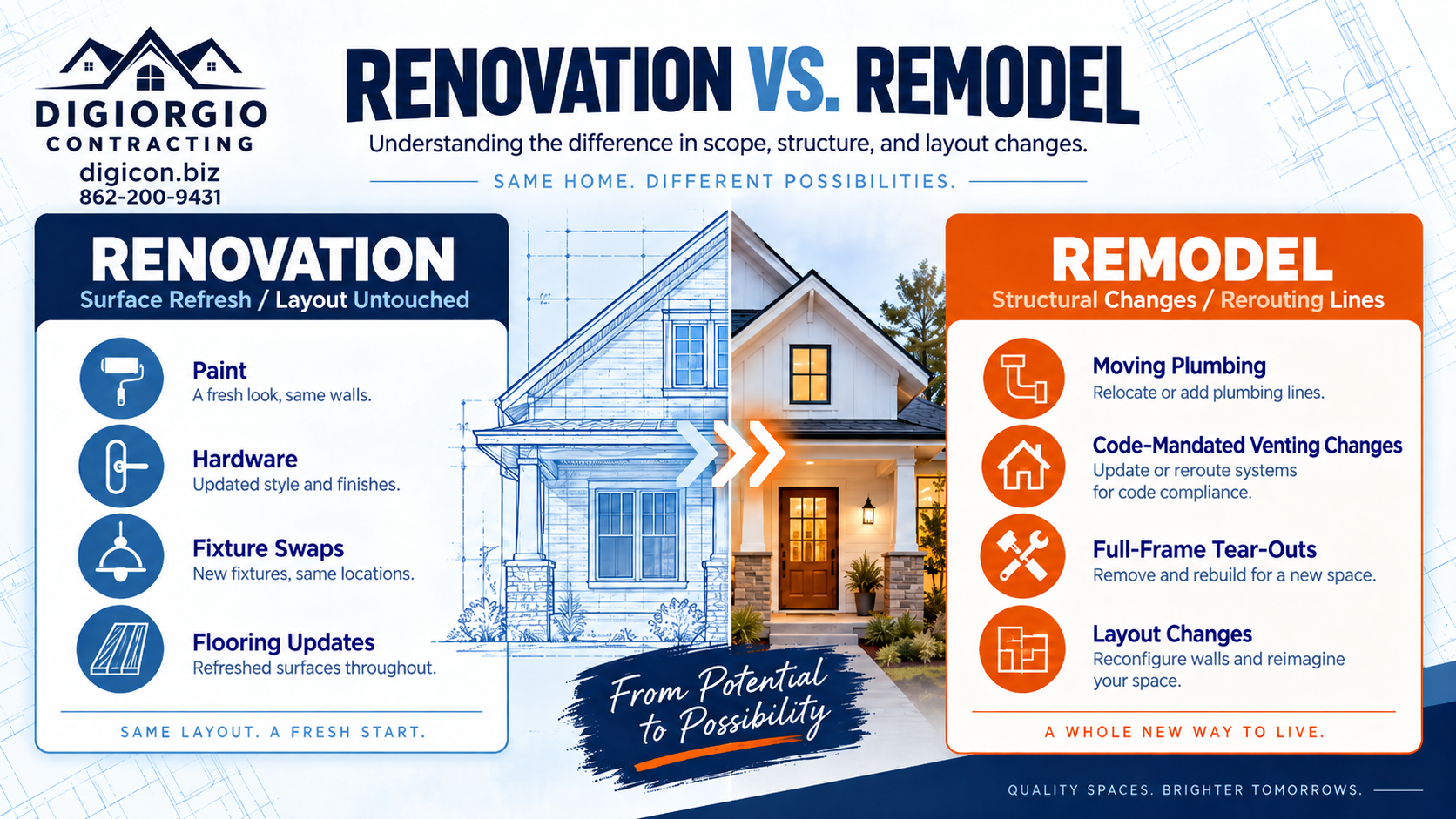
Homeowners often use these terms interchangeably, but they can describe very different levels of work.
Bathroom Refresh
A bathroom refresh is the lightest level of work.
The room stays fundamentally the same, but selected fixtures and finishes are updated.
A refresh may include:
- Replacing a vanity
- Installing a new faucet
- Replacing a toilet
- Changing a mirror
- Updating lighting
- Painting
- Replacing hardware
- Installing accessories
- Replacing a shower door
- Minor flooring work
The walls, layout, plumbing locations, and major components generally stay in place.
A refresh can make a bathroom look considerably newer without rebuilding the entire room.
Bathroom Renovation
A bathroom renovation usually means improving or updating the existing bathroom without significantly changing its basic layout.
That can involve more work than a simple refresh, but the overall structure and function of the room remain largely the same.
Typical renovation work might include:
- New flooring
- New vanity and countertop
- New toilet
- New lighting
- New plumbing fixtures
- New wall finishes
- Updated tub or shower finishes
- Cosmetic repairs
- Improved ventilation
A renovation can be fairly extensive, but it generally works with the existing room rather than fundamentally changing it.
Full Bathroom Remodel
When I refer to a bathroom remodel, I generally mean a more complete project.
In many cases, that means the room is gutted down to the framing and rebuilt properly from the inside out.
A full remodel may include:
- Complete demolition
- Removal of the existing tub or shower
- Removal of the vanity and toilet
- Removal of wall finishes
- Removal of flooring
- New plumbing fixtures
- New electrical components
- New drywall or backer systems
- Waterproofing
- New tile
- New flooring
- New vanity
- New toilet
- New lighting
- New exhaust fan
- Painting and trim
- Final accessories
A remodel may also include changing the way the bathroom functions.
For example:
- Converting a bathtub to a walk-in shower
- Installing a larger shower
- Adding a shower niche
- Adding a bench
- Changing fixture types
- Making accessibility improvements
- Upgrading plumbing and electrical systems
A straightforward full remodel can still keep the toilet, vanity, and shower in roughly the same locations.
For this kind of project, about $8,000 in labor plus materials is a reasonable starting point.
Accessibility Conversion
An accessibility conversion deserves its own category because the goal is not simply appearance.
The goal is to make the bathroom safer, easier to use, and more comfortable.
Accessibility work may be part of a full remodel, or it may be a more targeted project.
Common accessibility improvements include:
- Tub-to-shower conversions
- Walk-in showers
- Low-threshold shower bases
- Barrier-free showers
- Grab bars
- Fold-down shower seating
- Handheld shower heads
- Better placement of controls
- Slip-resistant flooring
- Improved lighting
- Wider access where practical
- Structural blocking inside walls for future grab bars
One important advantage of doing accessibility work during a full remodel is that the walls are already open.
That makes it possible to add proper framing and blocking where it is actually needed instead of trying to retrofit support later.
Accessibility planning can also be useful even if the homeowner does not currently need grab bars or seating.
Adding blocking now can make future upgrades much easier.
Major Remodel or Reconfiguration
Some bathrooms go beyond a straightforward full-gut remodel.
Once walls move, plumbing is relocated, or the entire layout changes, the project becomes considerably more involved.
Examples include:
- Moving a toilet
- Relocating a shower
- Relocating a tub
- Moving multiple plumbing fixtures
- Removing or moving walls
- Expanding the bathroom
- Changing door locations
- Reconfiguring the floor plan
- Adding laundry equipment
- Making structural changes
These projects usually require more coordination and often involve licensed plumbing and electrical trades.
The labor cost can increase quickly because we are no longer simply rebuilding the existing bathroom.
We are creating a different room.
Building a Brand-New Bathroom
The most involved bathroom project is creating a bathroom where one does not currently exist.
This might include:
- Adding a basement bathroom
- Converting part of a bedroom
- Converting a closet or storage area
- Adding a powder room
- Creating a new primary bathroom
- Building a bathroom as part of an addition
Unlike a remodel, there may be little or no existing infrastructure available.
A new bathroom may require:
- New water supply lines
- New drain and vent piping
- New electrical circuits
- New exhaust ventilation
- New framing
- New walls
- New doors
- Structural modifications
- Insulation
- Drywall
- Flooring
- Waterproofing
- Fixtures
- Finishes
Because everything may need to be created from scratch, a new bathroom generally costs more than remodeling an existing one.
What Does $8,000 in Labor Actually Cover?
For a straightforward full bathroom remodel, the labor may include work such as:
- Demolition
- Disposal
- Framing and blocking
- Wall and floor preparation
- Plumbing rough-in and finish work
- Electrical rough-in and finish work
- Shower or tub installation
- Waterproofing
- Tile installation
- Flooring
- Drywall
- Painting
- Trim
- Vanity installation
- Toilet installation
- Mirror installation
- Accessory installation
- Final cleanup
Every bathroom is different, so not every project includes every one of those tasks.
But the point is that a full bathroom remodel is much more than simply swapping out a toilet and vanity.
It is a complete rebuild of one of the most technically complicated rooms in the house.
What Does “Plus Materials” Mean?
Materials can change the final price dramatically.
Homeowners usually have a great deal of control over this part of the budget.
You can spend modestly or very heavily on:
- Vanities
- Faucets
- Toilets
- Shower valves
- Shower heads
- Tile
- Bathtubs
- Shower bases
- Glass doors
- Lighting
- Mirrors
- Exhaust fans
- Hardware
- Accessories
A standard toilet and a premium toilet perform the same basic job.
A stock vanity and a custom vanity both provide storage and a sink.
But the price difference can be substantial.
That is why I like separating labor from materials.
It lets homeowners decide where they want to spend more and where they do not.
What Can Make a Bathroom Remodel More Expensive?
The biggest cost increases are often not the things you can see before the job starts.
They are what we find after demolition.
Water Damage
Bathrooms are wet areas, and long-term leaks are not always visible from the finished side.
Once the room is opened up, we may find:
- Rotted subfloor
- Damaged floor joists
- Rotted wall framing
- Mold or moisture damage
- Leaks around the toilet
- Failed shower waterproofing
- Water intrusion around a tub
A small repair may be minor.
A damaged floor structure is another matter.
Plumbing Problems
Older homes often contain plumbing that has been repaired, modified, or patched over many years.
Once walls are open, we may discover:
- Old or deteriorated supply lines
- Poorly routed drains
- Improper venting
- Corroded piping
- Previous repairs that should be corrected
- Drain locations that do not work with the new layout
Moving plumbing can also increase cost significantly.
Relocating a toilet or shower drain is very different from replacing a fixture in its existing location.
Electrical Upgrades
Bathrooms have specific electrical requirements.
Older bathrooms may not have:
- Proper GFCI protection
- Adequate lighting
- Dedicated circuits
- Proper exhaust fan wiring
- Enough receptacles
- Appropriate wiring for heated floors
If the bathroom needs substantial electrical work, that can increase the project cost.
Licensed electrical work is coordinated with a qualified electrician where required.
Structural Problems
Demolition can also reveal framing problems.
Examples include:
- Damaged joists
- Improper notching
- Sagging floors
- Poor previous framing
- Uneven floors
- Walls that need correction
- Subfloors that need rebuilding
These problems need to be corrected before the new bathroom goes in.
There is little value in installing expensive tile over a floor that is not structurally sound.
Upgrades That Can Make a Bathroom Much Better
Once the basic remodel is covered, there are several options that can make the finished bathroom considerably more comfortable or upscale.
Radiant Heated Floors
Electric radiant floor heating is one of the best upgrades for a tiled bathroom.
The heating system is installed underneath the finished floor and controlled by a thermostat.
It adds cost for:
- Heating components
- Electrical work
- Floor preparation
- Installation
But the best time to install it is during the remodel.
Adding it later would require removing the finished floor.
Tile
Tile can dramatically change the character of the room.
Options include:
- Ceramic
- Porcelain
- Large-format tile
- Subway tile
- Mosaic tile
- Natural stone
- Decorative tile
Tile can be used on:
- Shower walls
- Tub surrounds
- Bathroom floors
- Accent walls
- Niches
- Benches
Tile pricing varies greatly, but labor can also increase depending on pattern, size, layout, and complexity.
Shower Niches
A recessed shower niche gives you a built-in place for soap, shampoo, and other items.
It looks cleaner than a hanging rack or corner shelf.
A niche adds some labor for:
- Framing
- Waterproofing
- Tile
- Trim
But it is usually a worthwhile upgrade.
Shower Benches
A built-in or fold-down bench can improve comfort and accessibility.
It can also be useful for shaving, washing, or future aging-in-place needs.
Frameless Glass
A custom frameless glass enclosure can make a shower feel larger and more finished.
It is more expensive than a curtain or framed enclosure, but it can significantly improve the appearance of a tiled shower.
Better Lighting
Good bathroom lighting can make a huge difference.
Instead of relying on one vanity light, consider:
- Recessed ceiling lights
- Vanity lighting
- Shower lighting
- Illuminated mirrors
- Dimmers
- Separate lighting zones
Lighting is both functional and decorative.
Better Ventilation
A good exhaust fan is not glamorous, but it is one of the smartest upgrades you can make.
It helps control humidity and protects:
- Paint
- Drywall
- Trim
- Tile
- Cabinetry
- Fixtures
Good ventilation helps protect the investment you just made in the room.
A Small Bathroom Can Still Be Expensive
Bathroom cost is not determined by square footage alone.
Two identical bathrooms can have dramatically different prices.
One homeowner may choose:
- Standard tub
- Acrylic surround
- Stock vanity
- Basic tile floor
- Standard fixtures
- Shower curtain
Another may choose:
- Custom tiled shower
- Heated floor
- Bench
- Niche
- Frameless glass
- Premium tile
- Custom vanity
- Upgraded plumbing fixtures
- Premium lighting
The room may be the same size.
The scope and finish level are completely different.
A Practical Bathroom Budget
A reasonable way to think about a bathroom remodel is:
Labor
Start around $8,000 for a straightforward full-gut remodel.
Materials
Plan on roughly $4,000 to $10,000+, depending on your selections.
Contingency
Keep some additional money available for hidden conditions discovered during demolition.
That produces some useful planning ranges:
$12,000–$18,000
A straightforward full remodel with sensible material selections.
$18,000–$25,000
An upgraded bathroom with more tile, better fixtures, glass, lighting, heated flooring, or other options.
$25,000+
Projects with substantial layout changes, plumbing relocation, structural work, custom showers, extensive tile, or high-end finishes.
Large primary bathrooms can easily exceed these numbers.
Why an On-Site Estimate Matters
Online calculators can give you a rough number.
They cannot tell you:
- Whether your subfloor is damaged
- Whether your plumbing is properly vented
- Whether the shower has been leaking
- Whether the floor is level
- Whether electrical circuits need upgrading
- How difficult plumbing relocation will be
- What materials you actually want
That is why I prefer to look at the bathroom, take measurements, discuss what you want to accomplish, and build a written estimate around the real project.
The goal is not to sell the most expensive bathroom possible.
The goal is to help you understand where the money goes, where upgrades make sense, and where spending more may not add much value.
If you are considering a bathroom refresh, renovation, remodel, accessibility conversion, or new bathroom project in Northern New Jersey, DiGiorgio Contracting LLC can help you plan the scope and develop a realistic budget.
Request an Estimate:
https://digicon.biz/request-for-estimate/
DiGiorgio Contracting LLC
Licensed, Insured & Bonded NJ General Contractor
862-200-9431
https://digicon.biz/