A deck can add a lot of usable space to a home, but it also takes a beating from weather, moisture, sun, foot traffic, and age. Over time, boards loosen, railings move, stairs wear out, fasteners corrode, and structural components can begin to weaken.
When that happens, homeowners often face the same question: Can this deck be repaired, or does it need to be replaced?
The answer depends on the condition of the deck, the type of damage, the structure underneath, and how the deck is being used.
1. Start with safety
The first question is not cosmetic. It is safety.
A deck may look worn on the surface, but still be structurally sound. Another deck may look decent from above, but have hidden problems underneath. Soft framing, loose posts, failing stairs, weak railings, poor ledger attachment, or rotted joists can all create serious concerns.
If the deck moves, bounces, feels unstable, or has stairs or railings that do not feel secure, those issues should be looked at before focusing on appearance.
2. Surface boards are often repairable
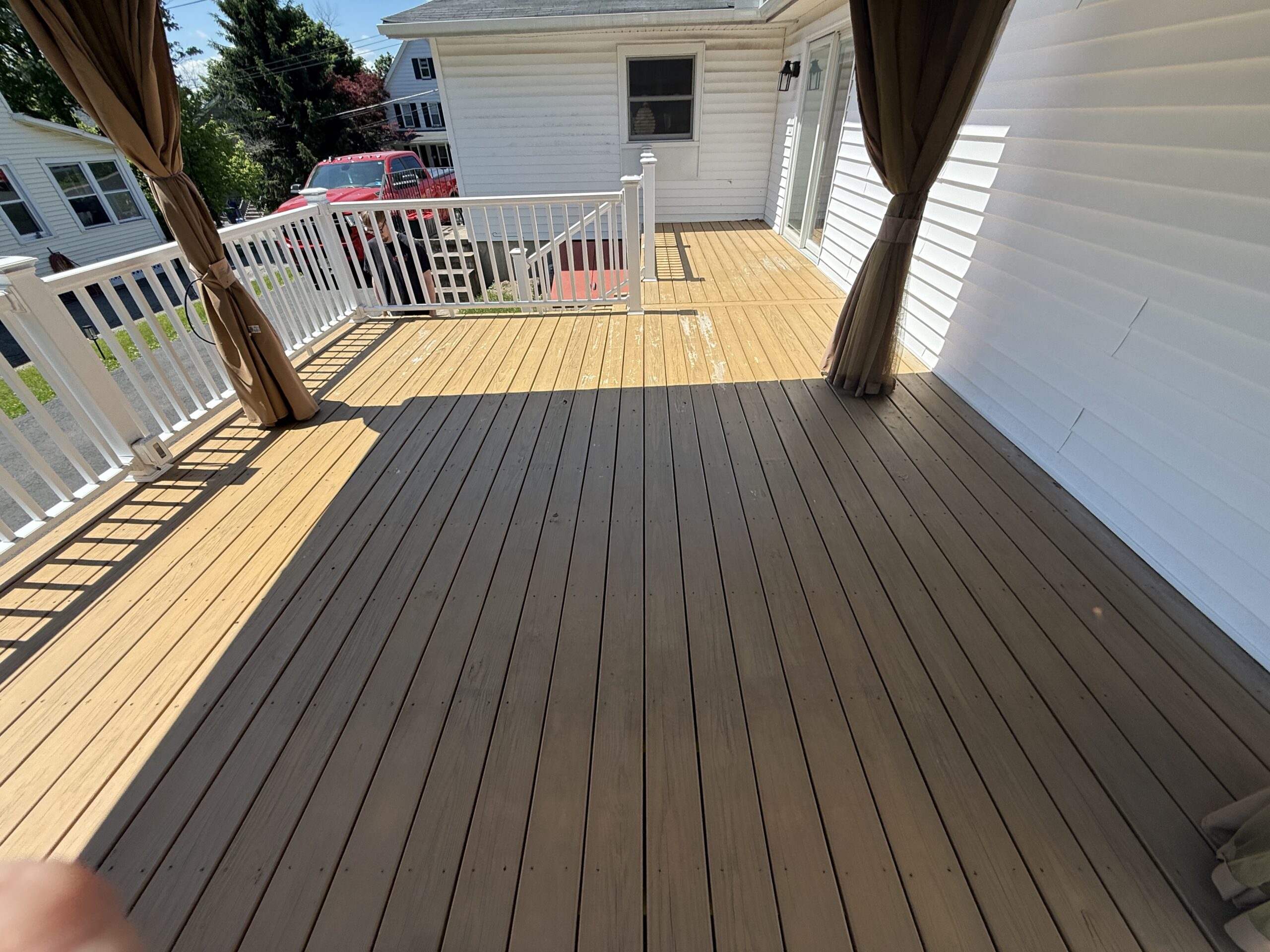
If the deck structure is solid but the surface boards are worn, cracked, splintering, or outdated, repair or resurfacing may make sense.
This might include replacing damaged boards, tightening or replacing fasteners, sanding or refinishing wood decking, or resurfacing the deck with new deck boards if the framing is still in good condition.
In some cases, a deck can look dramatically better without replacing the entire structure.
3. Railings and stairs deserve extra attention
Railings and stairs are two areas where small problems can become safety issues.
Loose railings, wobbly posts, uneven stair treads, weak stringers, or damaged handrails should not be ignored. Even if the main deck surface seems usable, unsafe stairs or railings may require repair or replacement.
These areas see a lot of movement and weight, so they need to be secure.
4. The framing matters most
The most important part of a deck is usually the part homeowners see the least: the framing underneath.
Joists, beams, posts, footings, hangers, fasteners, and the ledger board all affect whether the deck is safe and worth resurfacing. If the framing is solid, repairs or resurfacing may be a good option.
If the framing has widespread rot, poor connections, settling, or major structural issues, replacement may be the better long-term choice.
There is no benefit in putting new decking on top of a structure that is already failing.
5. Think about age and future use
The age of the deck matters, but age alone does not decide the answer.
A well-built older deck may be repairable. A newer deck with poor construction or water damage may need more serious work. The right decision depends on condition, not just age.
It also helps to think about how you use the deck. Is it mainly for walking out to the yard? Do you entertain on it? Does it support furniture, grills, planters, or heavy traffic? A deck that sees regular use needs to be safe, stable, and built for that use.
6. Repair may make sense when the problem is limited
Deck repair may be a good option when:
- The framing is solid
- Damage is limited to a few boards or railings
- Stairs need localized repair
- Fasteners or hardware need attention
- The deck is safe but cosmetically worn
- The homeowner wants to extend the deck’s useful life
In these cases, repair can be a practical and cost-effective choice.
7. Replacement may make sense when problems are widespread
Deck replacement may be the better choice when:
- The framing has widespread rot or structural problems
- Posts, beams, or joists are failing
- The deck was poorly built
- The layout no longer works
- Stairs or railings are unsafe throughout
- Repairs would cost too much compared to rebuilding
- The homeowner wants a larger or redesigned outdoor space
At some point, repeated repairs can become more expensive and less effective than starting over with a properly built deck.
8. Get the deck looked at before deciding
A deck decision should start with an honest look at the structure, not just the surface.
Sometimes a deck that looks rough only needs targeted repairs. Other times, the visible problems are signs of deeper issues. A proper evaluation can help determine whether repair, resurfacing, or replacement makes the most sense.
Planning a deck repair or replacement in Northern New Jersey?
DiGiorgio Contracting LLC provides licensed, insured, and bonded home improvement services for homeowners in Newton, Sussex County, and the surrounding Northern New Jersey area.
If your deck needs repair, resurfacing, stair work, railing updates, or replacement, the first step is a clear conversation about the condition of the deck, your goals, and the safest path forward.
Ready to talk about your project?
Request an Estimate