A bathroom remodel can make a big difference in the comfort, safety, and value of your home. But before choosing tile, fixtures, vanities, or shower doors, it helps to slow down and think through what you actually need from the space.
A good bathroom remodel starts with a clear plan. Here are five practical things homeowners should think about before starting a bathroom project.
1. What problem are you trying to solve?
Not every bathroom remodel has the same goal.
Some homeowners want an updated look. Others need better storage, improved lighting, safer access, a larger shower, or repairs from old water damage. In some cases, the bathroom still works, but it feels outdated or difficult to clean. In other cases, the layout no longer works for the people using it.
Before work begins, it helps to identify the main reason for the remodel. Are you trying to improve style, function, accessibility, resale value, or all of the above?
That answer will guide the rest of the project.
2. Are you keeping the same layout?
One of the biggest cost factors in a bathroom remodel is whether the plumbing and electrical locations are staying the same.
Keeping the toilet, shower, tub, vanity, and lighting in roughly the same locations can often make the project more straightforward. Moving plumbing or electrical may still be possible, but it can add time, cost, and coordination with licensed trade professionals when required.
If the existing layout works, a bathroom can often be dramatically improved with new fixtures, surfaces, lighting, flooring, and finish details without completely redesigning the room.
3. Tub, shower, or tub-to-shower conversion?
This is one of the most important decisions in many bathroom remodels.
A traditional tub may still make sense for families with young children or homes where a bathtub is used regularly. But for many homeowners, especially those thinking about safety and accessibility, a tub-to-shower conversion can make the bathroom easier and more comfortable to use.
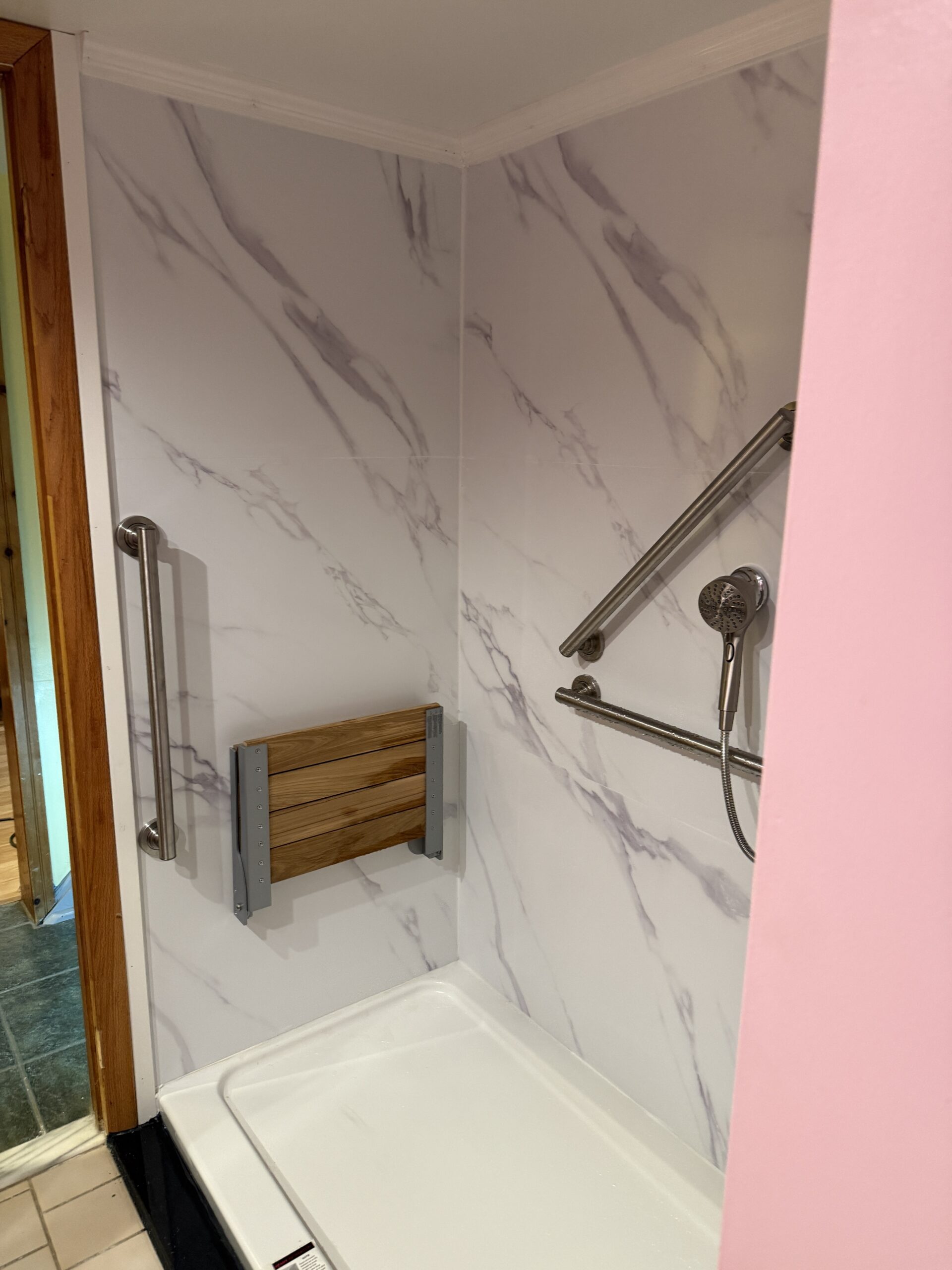
Low-threshold showers, grab bars, handheld shower heads, built-in niches, and seating options can all make a bathroom more practical without making it feel institutional.
The best choice depends on how the bathroom is used now and how it may need to function in the future.
4. Materials matter more than people think
Bathrooms deal with water, humidity, cleaning products, and daily use. That means material choices matter.
Wall surrounds, tile, waterproofing systems, flooring, vanities, fixtures, faucets, caulk, grout, and trim all affect the final result. Some materials look good at first but may not hold up well in a wet environment if they are not installed correctly or used in the right place.
It is worth thinking about durability, cleaning, maintenance, and long-term use — not just how something looks in a showroom photo.
5. Get the scope in writing
A bathroom remodel has a lot of moving parts. Demo, disposal, plumbing, electrical, wall repair, waterproofing, fixtures, flooring, trim, paint, and finish work all need to be clearly understood before the job starts.
A written estimate helps define what is included, what is not included, what materials are being used, and what expectations both the homeowner and contractor have for the project.
Clear scope protects everyone. It reduces confusion, helps control surprises, and gives the project a better chance of going smoothly.
Planning a bathroom remodel in Northern New Jersey?
DiGiorgio Contracting LLC provides licensed, insured, and bonded home improvement services for homeowners in Newton, Sussex County, and the surrounding Northern New Jersey area.
Whether you are planning a full bathroom remodel, a tub-to-shower conversion, an accessibility improvement, or a smaller bathroom refresh, the first step is a clear conversation about your goals, budget, materials, and expectations.
Ready to talk about your project?
Request an Estimate